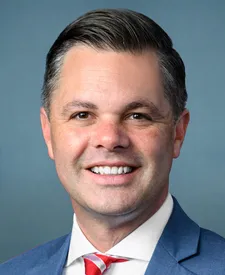
Zachary Nunn
Republican · Representative for Iowa’s 3rd district
Career totals · 3 elections · 2022–2026
$13.3 million
raised by Nunn’s campaigns, everything from 2022 to 2026 added together.
32%
of it came from organized groups rather than from people giving on their own: at least $4.3 million from PACs, plus donations that organizations collected and directed.
$12.1 million
was spent about Nunn by outside groups. These are ads for or against them that their campaign cannot control, and none of it is part of the money above.
Every number on this page comes from Federal Election Commission filings, read on October 12, 2026. An election still under way keeps raising money, so its figure will have grown since. Check Nunn on FEC.gov
Where the money came from
Everything Nunn’s campaigns have reported raising, split by who gave it.
- Individual donorsMoney given by people, in their own name.42%$5.6 million
- Political action committeesOrganized groups: company-run committees, unions, trade associations.32%$4.2 million
- Other sourcesParty transfers, the candidate's own money, loans and smaller categories.26%$3.5 million
Money bundled through organizations
Not every “individual” donation arrives on its own. An organization can collect checks from its members, already earmarked for Nunn, and deliver them in a bundle. The law counts that as individual money, but the organization still chose where it went.
$95,000
reached Nunn this way, 2% of everything they raised from individuals. Each donation came from a real person. The organization picked who got it.
- AIPACThe American Israel Public Affairs Committee's political arm. It backs candidates of both parties it considers strong supporters of the U.S.-Israel relationship.$89,000
- SBA Pro-Life AmericaThe candidate fund of Susan B. Anthony Pro-Life America, which backs candidates who oppose abortion.$5,800
We can only count the organizations we have measured, so the real figure could be higher than this, never lower. Bundling is legal and widely used, and appearing here is not evidence of wrongdoing.
Who gave the most
Committee contributions from the 2024 and 2026 election periods, grouped by how the FEC classifies each giver. This covers a slice of the career total, and giving to a campaign is legal and ordinary.
- Corporation28%$1.1 million
- Trade association19%$762,000
- Labor union<1%$13,000
- Membership organization6%$223,000
- Co-operative1%$34,000
- Corporation without capital stock1%$59,000
- Unclassified45%$1.8 million
Which industries
- Real estate & construction20% · $20,000
- Insurance20% · $20,000
- Banking & finance20% · $20,000
- Other40% · $40,000
The FEC records that a committee is a corporation; it does not record its industry. Those labels are ours, kept in a published list anyone can check. Where we have not labeled a giver we say “Other” rather than guessing.
Largest committee givers
- 1Winred$35,000
- 2Cole Combined CommitteeA joint fundraising committee raising for Representative Tom Cole of Oklahoma and allied committees.$32,000
- 3Scalise Leadership Fund$28,000
- 4Team Hill$26,000
- 5Smith Victory$24,000
Show all 10 giversShow fewer
“Unclassified” means the FEC records no organization type for that committee, which usually means a leadership PAC. We show it as unclassified rather than guessing which industry it belongs to.
Their money and their votes, side by side
For each industry that gave to Nunn: the money, then the bills they voted on in that industry’s area of law. The Library of Congress assigns each bill’s subject, not us, so nothing here is picked to make a point.
This is not evidence that money bought a vote. People often donate to politicians who already agree with them. We show what was given and how Nunn voted; the judgment is yours.
Insurance—$40,000 given
Nunn voted on 19 bills in this area. The 3 most substantive are listed first.
- H R 736On Motion to Suspend the Rules and PassProtect Small Businesses from Excessive Paperwork Act of 2025 This bill extends the deadline for certain companies that are required to file beneficial ownership information with the Financial Crimes Enforcement Network (FinCEN).Yes
- S J RES 28On PassageThis joint resolution nullifies the final rule issued by the Consumer Financial Protection Bureau (CFPB) titled Defining Larger Participants of a Market for General-Use Digital Consumer Payment Applications and published on December 10, 2024.Yes
- S J RES 18On PassageThis joint resolution nullifies the final rule issued by the Consumer Financial Protection Bureau titled Overdraft Lending: Very Large Financial Institutions and published on December 30, 2024.Yes
Show 5 more bills with full summariesShow fewer
- S J RES 13On PassageThis joint resolution nullifies the final rule issued by the Department of the Treasury’s Office of the Comptroller of the Currency titled Business Combinations Under the Bank Merger Act and published on September 25, 2024.Yes
- H R 3394On Motion to Suspend the Rules and Pass, as AmendedFair Investment Opportunities for Professional Experts Act This bill expands the eligibility criteria for an accredited investor for purposes of participating in private offerings of securities to include an individual determined by the Securities and Exchange Commission (SEC) to have qualifying professional knowledge through educational or professional experience. (Certain unregistered securities may only be offered to accredited investors.) The bill also provides statutory authority for certain existing criteria for an accredited investor, including licensure or registration in good standing as a broker or investment adviser, specified annual salary, and specified net worth.Yes
- H R 3234On Motion to Suspend the Rules and Pass, as AmendedThis bill increases the amount insured depository institutions may accept as reciprocal deposits. (Reciprocal deposits are used by institutions to increase the availability of deposit insurance by splitting large deposits using a reciprocal network of institutions.) The bill creates a tiered system so that the allowable amount is based on the institution's total liabilities.Yes
- H R 4544On Motion to Suspend the Rules and Pass, as AmendedThis bill requires federal financial regulators to review and streamline the application process for the formation of de novo, or new, depository institutions or credit unions.Yes
- H R 5317On Motion to Suspend the Rules and Pass, as AmendedThis bill changes the treatment of certain types of deposits so they are no longer classified as brokered deposits.Yes
Banking & finance—$20,000 given
Nunn voted on 26 bills in this area. The 3 most substantive are listed first.
- H R 33On PassageTo amend the Internal Revenue Code of 1986 to provide special rules for the taxation of certain residents of Taiwan with income from sources within the United States.Yes
- H R 736On Motion to Suspend the Rules and PassProtect Small Businesses from Excessive Paperwork Act of 2025 This bill extends the deadline for certain companies that are required to file beneficial ownership information with the Financial Crimes Enforcement Network (FinCEN).Yes
- H J RES 25On PassageThis joint resolution nullifies requirements for persons effectuating decentralized financial (DeFi) transactions to report certain information regarding digital asset sales to the Internal Revenue Service (IRS).Yes
Show 5 more bills with full summariesShow fewer
- H R 517On Motion to Suspend the Rules and Pass, as AmendedFiling Relief for Natural Disasters Act This act authorizes the Internal Revenue Service (IRS) to postpone federal tax deadlines for taxpayers affected by a qualified state declared disaster, upon written request by the state governor.No vote
- H R 997On Motion to Suspend the Rules and Pass, as AmendedNational Taxpayer Advocate Enhancement Act of 2025 This bill authorizes the National Taxpayer Advocate to appoint legal counsel within the Taxpayer Advocate Service (TAS) to report directly to the National Taxpayer Advocate.No vote
- H R 1491On Motion to Suspend the Rules and Pass, as AmendedDisaster Related Extension of Deadlines Act This act requires the Internal Revenue Service (IRS) to treat the postponement of the federal tax return deadline due to a federally declared disaster or certain other events as an extension of such deadline for purposes of calculating the limit on a tax refund.Yes
- S J RES 28On PassageThis joint resolution nullifies the final rule issued by the Consumer Financial Protection Bureau (CFPB) titled Defining Larger Participants of a Market for General-Use Digital Consumer Payment Applications and published on December 10, 2024.Yes
- S J RES 18On PassageThis joint resolution nullifies the final rule issued by the Consumer Financial Protection Bureau titled Overdraft Lending: Very Large Financial Institutions and published on December 30, 2024.Yes
We do not score these or say which way a vote favored an industry, because that would be our opinion dressed up as a finding. Each bill links to the chamber’s own roll-call record. Industries where fewer than three bills came to a vote are left out, because a handful of votes cannot show a pattern.
Money spent about this member
Outside groups, usually super PACs, may spend without limit on ads for or against a candidate, as long as they do not coordinate with the campaign. Nunn has no legal control over any of it.
This is not a donation. Nobody gave this money to Nunn. It was spent on advertising about Nunn, and money spent against a candidate is plainly not funding them. So it never gets added to the figures above.
$12.1 million
has been spent for or against Nunn by outside groups. $4.5 million supported Nunn; $7.6 million opposed Nunn.
Largest outside spenders
Summed across 3 elections, using the Commission's aggregated totals so amended filings and 24-hour notices are not double-counted.
Spent supporting
$3.6 millionAds urging people to vote for this member. Still not their money, and they cannot direct how it is spent.
- Americans for Prosperity ActionThe political network founded by the Koch family, which backs candidates favoring lower taxes and less regulation.$1.4 million
- FairshakeA super PAC funded by cryptocurrency companies, spending for candidates of both parties it sees as friendly to the industry.$999,000
- Congressional Leadership Fund$662,000
- America PACA super PAC founded and largely funded by Elon Musk that supported Donald Trump in 2024.$535,000
Spent opposing
$6.4 millionAds urging people to vote against this member. This money was spent to defeat them.
- DCCCThe Democratic Congressional Campaign Committee, the House Democrats' official campaign organization.$3.2 million
- House Majority PAC$1.5 million
- Your Community PAC$908,000
- House Majority PACA super PAC aligned with House Democratic leadership, spending to win or hold Democratic House seats.$903,000
Election by election
The career figures above are the sum of these elections. Each row links to the Commission’s page for that election, where the numbers match line for line.
| Election | Raised | From PACs | Outside spending | |
|---|---|---|---|---|
| 2026in progress | $4.9 million | $1.7 million 35% | $33,000 | FEC |
| 2024 | $5.8 million | $2.1 million 36% | $8.8 million | FEC |
| 2022 | $2.6 million | $397,000 15% | $3.2 million | FEC |
Raised is everything the campaign took in for that election. From PACs is the slice of it given by political action committees. Outside spending is what other groups spent on ads about the race, for and against—it is not part of “Raised”. An election marked in progress is still raising money, so its figures are not final.
We never publish the names of individual donors, and anything we cannot source stays off the page. The methodology explains every such choice.