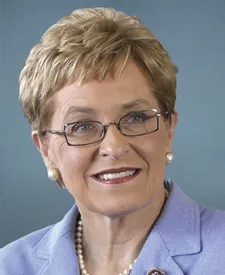
Marcy Kaptur
Democrat · Representative for Ohio’s 9th district
Career totals · 23 elections · 1982–2026
$23.9 million
raised by Kaptur’s campaigns, everything from 1982 to 2026 added together.
45%
of it came from organized groups rather than from people giving on their own: at least $10.6 million from PACs, plus donations that organizations collected and directed.
$8.8 million
was spent about Kaptur by outside groups. These are ads for or against them that their campaign cannot control, and none of it is part of the money above.
Every number on this page comes from Federal Election Commission filings, read on October 12, 2026. An election still under way keeps raising money, so its figure will have grown since. Check Kaptur on FEC.gov
Where the money came from
Everything Kaptur’s campaigns have reported raising, split by who gave it.
- Individual donorsMoney given by people, in their own name.45%$10.7 million
- Political action committeesOrganized groups: company-run committees, unions, trade associations.44%$10.4 million
- Other sourcesParty transfers, the candidate's own money, loans and smaller categories.12%$2.8 million
Money bundled through organizations
Not every “individual” donation arrives on its own. An organization can collect checks from its members, already earmarked for Kaptur, and deliver them in a bundle. The law counts that as individual money, but the organization still chose where it went.
$198,000
reached Kaptur this way, 2% of everything they raised from individuals. Each donation came from a real person. The organization picked who got it.
- JStreetPAC$198,000
We can only count the organizations we have measured, so the real figure could be higher than this, never lower. Bundling is legal and widely used, and appearing here is not evidence of wrongdoing.
Who gave the most
Committee contributions from the 2024 and 2026 election periods, grouped by how the FEC classifies each giver. This covers a slice of the career total, and giving to a campaign is legal and ordinary.
- Corporation22%$602,000
- Trade association9%$258,000
- Labor union21%$561,000
- Membership organization6%$164,000
- Co-operative1%$32,000
- Corporation without capital stock<1%$12,000
- Unclassified40%$1.1 million
Which industries
- Defense & aerospace67% · $40,000
- Energy & utilities33% · $20,000
The FEC records that a committee is a corporation; it does not record its industry. Those labels are ours, kept in a published list anyone can check. Where we have not labeled a giver we say “Other” rather than guessing.
Largest committee givers
- 1J StreetThe PAC of J Street, a liberal pro-Israel group that supports a negotiated two-state solution. It bundles donations for candidates who share that position.$28,000
- 2Hoyer$25,000
- 3Clark$25,000
- 4International Longshoremen's Association$25,000
- 5American Association for Justice (Aaj)$23,000
Show all 10 giversShow fewer
- 6American Federation of State, County and Municipal Employees, Afl-Cio$23,000
- 7Air Line Pilots Association$23,000
- 8Pro-Choice Women$20,000
- 9BWX Technologies Inc$20,000
- 10Growth Energy PAC$20,000
“Unclassified” means the FEC records no organization type for that committee, which usually means a leadership PAC. We show it as unclassified rather than guessing which industry it belongs to.
Their money and their votes, side by side
For each industry that gave to Kaptur: the money, then the bills they voted on in that industry’s area of law. The Library of Congress assigns each bill’s subject, not us, so nothing here is picked to make a point.
This is not evidence that money bought a vote. People often donate to politicians who already agree with them. We show what was given and how Kaptur voted; the judgment is yours.
Energy & utilities—$20,000 given
Kaptur voted on 45 bills in this area. The 3 most substantive are listed first.
- H R 5184On Passageor the Affordable HOMES Act This bill rescinds Department of Energy (DOE) energy efficiency regulations applicable to manufactured housing and eliminates DOE’s authority to issue similar regulations.No
- H R 4593On PassageSaving Homeowners from Overregulation With Exceptional Rinsing Act or the SHOWER Act This bill provides statutory authority for a revised definition of showerhead for the purpose of federal water efficiency regulations.No
- H R 375On Motion to Suspend the Rules and PassContinued Rapid Ohia Death Response Act of 2025 This bill establishes requirements to research and control Rapid Ohia Death, which is the disease caused by the fungal pathogen known as Ceratocystis fimbriata that affects the tree of the species Metrosideros polymorpha .Yes
Show 5 more bills with full summariesShow fewer
- H R 26On PassageProtecting American Energy Production Act This bill prohibits the President from declaring a moratorium on the use of hydraulic fracturing unless Congress authorizes the moratorium.Yes
- H J RES 35On PassageThis joint resolution eliminates an annual waste emissions charge on oil or gas facilities under the Methane Emissions Reduction Program.No
- H J RES 20On PassageThis joint resolution nullifies the rule titled Energy Conservation Program: Energy Conservation Standards for Consumer Gas-fired Instantaneous Water Heaters and submitted by the Department of Energy (DOE) on December 26, 2024.No
- H R 4090On PassageThis bill directs the Department of the Interior to address mineral supply chain vulnerabilities, including by accelerating and expanding mineral production on federal land (i.e., National Forest System land, public lands, and any land that may be leased for the exploration, development, or production of hardrock minerals).No vote
- H J RES 61On PassageThis joint resolution removes emission regulations on hazardous air pollutants under the rubber tire manufacturing source category, specifically from the rubber processing subcategory.No
We do not score these or say which way a vote favored an industry, because that would be our opinion dressed up as a finding. Each bill links to the chamber’s own roll-call record. Industries where fewer than three bills came to a vote are left out, because a handful of votes cannot show a pattern.
Money spent about this member
Outside groups, usually super PACs, may spend without limit on ads for or against a candidate, as long as they do not coordinate with the campaign. Kaptur has no legal control over any of it.
This is not a donation. Nobody gave this money to Kaptur. It was spent on advertising about Kaptur, and money spent against a candidate is plainly not funding them. So it never gets added to the figures above.
$8.8 million
has been spent for or against Kaptur by outside groups. $1.7 million supported Kaptur; $7.2 million opposed Kaptur.
Largest outside spenders
Summed across 9 elections, using the Commission's aggregated totals so amended filings and 24-hour notices are not double-counted.
Spent supporting
$873,000Ads urging people to vote for this member. Still not their money, and they cannot direct how it is spent.
Spent opposing
$6.8 millionAds urging people to vote against this member. This money was spent to defeat them.
- Congressional Leadership Fund$4.3 million
- NRCCThe National Republican Congressional Committee, the House Republicans' official campaign organization.$1.2 million
- America PACA super PAC founded and largely funded by Elon Musk that supported Donald Trump in 2024.$410,000
- Win It Back PACA super PAC affiliated with Club for Growth.$349,000
Show all 6 groupsShow fewer
- The Sentinel Action Fund$292,000
- Drain the Dc Swamp PAC$282,000
Election by election
The career figures above are the sum of these elections. Each row links to the Commission’s page for that election, where the numbers match line for line.
| Election | Raised | From PACs | Outside spending | |
|---|---|---|---|---|
| 2026in progress | $4.3 million | $1.1 million 26% | $3,050 | FEC |
| 2024 | $5.1 million | $1.5 million 29% | $7.4 million | FEC |
| 2022 | $3.4 million | $1.2 million 36% | $1.2 million | FEC |
| 2020 | $1.1 million | $788,000 72% | $10 | FEC |
| 2018 | $772,000 | $587,000 76% | $78 | FEC |
| 2016 | $901,000 | $590,000 65% | $10 | FEC |
| 2014 | $892,000 | $669,000 75% | $10 | FEC |
| 2012 | $1.2 million | $706,000 61% | $121,000 | FEC |
| 2010 | $652,000 | $398,000 61% | $38,000 | FEC |
| 2008 | $641,000 | $328,000 51% | none | FEC |
| 2006 | $505,000 | $290,000 57% | none | FEC |
| 2004 | $660,000 | $337,000 51% | none | FEC |
| 2002 | $418,000 | $241,000 58% | none | FEC |
| 2000 | $583,000 | $252,000 43% | none | FEC |
| 1998 | $289,000 | $190,000 66% | none | FEC |
| 1996 | $402,000 | $219,000 54% | none | FEC |
| 1994 | $502,000 | $282,000 56% | none | FEC |
| 1992 | $291,000 | $208,000 72% | none | FEC |
| 1990 | $228,000 | $115,000 50% | none | FEC |
| 1988 | $278,000 | $202,000 73% | none | FEC |
| 1986 | $284,000 | $186,000 65% | none | FEC |
| 1984 | $364,000 | $0 0% | none | FEC |
| 1982 | $217,000 | $0 0% | none | FEC |
Raised is everything the campaign took in for that election. From PACs is the slice of it given by political action committees. Outside spending is what other groups spent on ads about the race, for and against—it is not part of “Raised”. An election marked in progress is still raising money, so its figures are not final.
We never publish the names of individual donors, and anything we cannot source stays off the page. The methodology explains every such choice.